Wedding planning
Wedding Seating Chart Template and How to Use It
By the editorial team · Updated 2026-11-23 · Every number linked to its source
Quick answer. Make your wedding seating chart once RSVPs are in and the final count is set, usually in the last month before the wedding. Start with a floor plan from your venue, place the couple's table and immediate family first, then group remaining guests by how they know each other. Confirm table sizes with your venue, since they vary.
How many tables do you need?
Enter your confirmed guest count and the number of seats per table your venue gives you, and the calculator tells you how many tables you need and how many seats are left over.
Seats per table depend on table size; your venue or rental company gives the exact number.
Want it on paper? The free printable planner has the full version with every task.
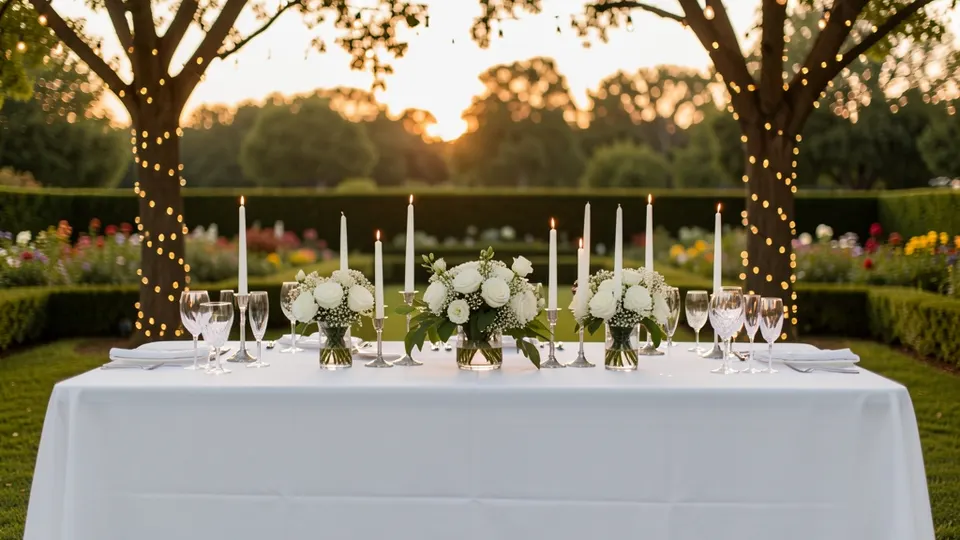
A wedding seating chart template gives you the frame, but the real work is deciding who sits with whom. Done well, a seating plan means guests find their place in seconds after cocktail hour, the caterer knows where every meal goes, and nobody spends the evening next to a stranger they have nothing in common with.
This page covers when to make the chart, how to work through it table by table, how to choose table shapes, and simple ways to display it. It assumes your guest list is final; if not, start with our wedding guest list page.
When to make the seating chart
Wait until the RSVPs are in. Seating people who have not replied means redoing tables later, and every change ripples across the chart. Emily Post suggests setting the reply deadline about two to three weeks before the wedding 1, so the realistic window for the seating chart is the final three weeks.
The Knot's checklist suggests giving your caterer the final headcount about a week before the wedding 2. Many caterers also want the seating plan or table-by-table meal counts at the same time, so check your contract and work back from that date. Plan to print escort cards, place cards and the display chart around two weeks out, then reprint only the cards that change.
How to make a wedding seating chart, step by step
- Get the floor plan. Ask your venue or coordinator for a drawing with table positions, the dance floor, bar, exits and any pillars. Seating starts with the room, not the list.
- Place the anchor tables. Put the couple's table first (a sweetheart table or a head table with the wedding party), then immediate family near it.
- Group the rest by connection. College friends, work friends, cousins, neighbors. Each table should have at least one or two people who know each other well.
- Seat guests who need extra care. Older relatives and guests with mobility needs go near the entrance and restrooms but away from speakers. Families with young children do well near an exit.
- Separate known tensions. Divorced parents or relatives who do not get along can be in the same room comfortably if their tables are not side by side.
- Count every seat. Check each table against its capacity and the total against your confirmed count.
Sticky notes on a printed floor plan are the classic method because names move easily. A spreadsheet works too, especially if you add a column for meal choice.
Round table seating and other table shapes
Round tables are the most common reception choice because everyone can see and talk to everyone else at the table. Long rectangular or banquet tables fit more guests into a narrow room and create a family-style feel, but guests mostly talk to the people beside and across from them.
How many people fit at a table depends on its size, the chairs, and how much room the place settings and centerpieces take. Rather than relying on a general figure, ask your venue or rental company exactly how many guests each of their tables seats comfortably, and whether that changes with your chair style. Plan for a few empty seats overall, which gives you room for a last-minute guest.
Mixing shapes is common: rounds for most guests, a long head table for the wedding party, and perhaps a few high-top tables near the bar.
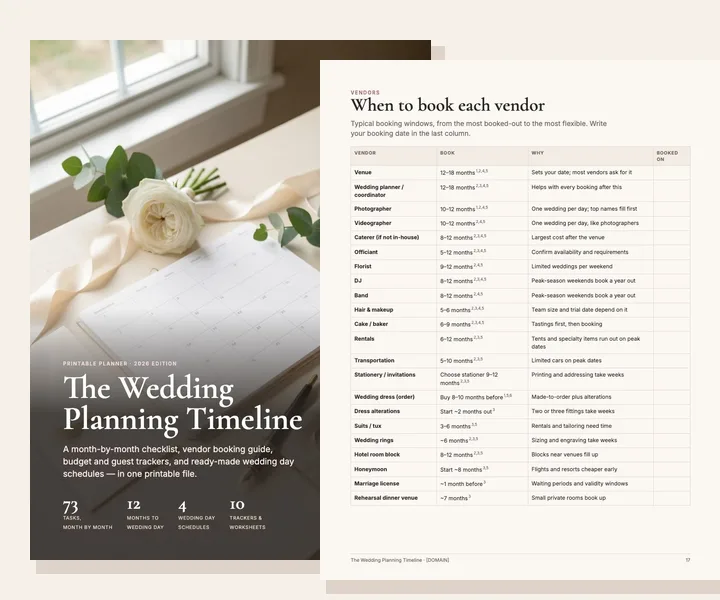
Free printable planner · 40 pages
Get the complete wedding planning timeline
Print the seating planner from the PDF, lay it over your venue's floor plan and move guests around in pencil until every table works.
- 73 tasks, month by month, with checkboxes
- When to book 21 vendors + comparison sheets
- Budget, guest list and RSVP trackers
- 4 wedding day schedules · US Letter and A4
Do you need assigned seats at all?
Not always. The service style matters. In The Knot's 2026 study, 60% of 2025 receptions served buffet or food stations, compared with 30% plated 3. With a plated meal, the caterer needs to know who ordered what at which seat, so assigned seating is close to essential.
With a buffet or stations, you have options:
- Assigned tables, open seats. Guests are told which table to sit at but choose their own chair. This is the most common middle ground.
- Reserved tables only. Seat the couple, wedding party and family; everyone else sits where they like.
- Fully open seating. Works for small or very casual weddings. Provide a few more seats than guests so groups can sit together.
Open seating saves a lot of planning time, but some guests do find it stressful to hunt for a seat as a single person or with children. Assigned tables keep the evening calm.
Wedding seating chart ideas: how to display it
Guests usually find their seats right after cocktail hour, which typically runs at least an hour 4, so the display should sit where they leave cocktails and enter the reception room. Common options:
- One large sign listing tables with names in alphabetical order underneath. Fast for guests to read if names are sorted by last name.
- Alphabetical list with table numbers. Easier to scan than a table-by-table layout when you have a large crowd.
- Escort cards on a table: one card per guest or household with the table number. Guests pick theirs up and carry it in.
- Place cards at each seat, which go with assigned seats rather than assigned tables.
Whatever you choose, size the text so it can be read from a step or two away, and use more than one display if you have a large guest count so people are not crowded around one sign.
Filling in a wedding seating chart template: mistakes to avoid
- Starting before RSVPs are final. You will redo most of it.
- Seating someone alone. Every guest should know at least one person at their table.
- Putting older guests next to the speakers. Music levels near the DJ or band make conversation hard.
- Forgetting vendor meals. Photographers, planners and musicians often need seats and meals; check each contract.
- Not giving the venue a copy. The coordinator and catering captain each need the final chart and a table-by-table meal list.
- Leaving no spares. Bring blank escort cards and a pen on the day, as our task list notes for the final two weeks.
When the chart is done, hand it to whoever will run the day, along with your wedding reception timeline, so they can answer guests' questions without finding you.
Frequently asked questions
How do I make my own wedding seating chart?
Wait until RSVPs close, then get a floor plan from your venue. Place the couple's table and immediate family first, then group remaining guests by how they know each other, making sure everyone knows at least one person at their table. Check each table against its capacity and the total against your final headcount before printing.
What to do instead of a seating chart?
You can assign tables but let guests choose their own seats, reserve tables only for family and the wedding party, or use fully open seating. Open seating works best for buffet or station service and small, casual weddings. With a plated meal, the caterer usually needs to know where each meal choice sits, so assignments help.
How do you display a wedding seating plan?
Place it where guests leave cocktail hour and enter the reception. Options include a large sign listing each table, an alphabetical list of guests with table numbers, or escort cards arranged on a table. For a large wedding, alphabetical order by last name is fastest to read, and two displays prevent crowding.
How big should a seating chart be for a wedding?
Big enough that guests can read their name from a step or two away. The size depends on how many names it carries and how many people will look at it at once. For larger guest counts, an alphabetical list split across two signs, or escort cards, keeps people moving quickly into the reception.
Can I create a wedding seating chart online?
Yes. A shared spreadsheet with columns for guest, table and meal choice is enough for most couples and is easy to sort alphabetically for the display sign. Online seating tools let you drag guests between tables. Whatever you use, export a final printed copy for the venue and your coordinator.
Sources
- Emily Post Institute: How to Word a Wedding Response Card
- The Knot, 2026: The Ultimate Wedding Planning Checklist, Plus a Timeline (updated Oct 27, 2026)
- The Knot, 2026: The Knot Real Weddings Study 2026 (Data Read-Out PDF; 10,474 US couples married in 2025)
- The Knot, 2024: The Wedding Reception Timeline You Need to Plan Ahead (updated Apr 19, 2024)